 Pause Care


Tap the button
"I need to calm down" sits front and center on the home screen. One tap starts a guided session, with nothing to choose in the moment.
Pause Care is a panic attack app that walks you through clinically-grounded breathing techniques the moment anxiety or a panic attack hits — just your next breath, with Pip breathing right alongside you.
Pip is your pocket companion inside Pause Care. Pick the face that matches how you feel, and watch Pip settle as you do.
Awful Anxious
 Okay
 Good
 Calm
No menus to dig through when your heart is racing. One button, then just follow along.
"I need to calm down" sits front and center on the home screen. One tap starts a guided session, with nothing to choose in the moment.
A calm voice counts you through each breath while Pip grows on the inhale and settles on the exhale. Close your eyes if you like.
A quick check-in afterwards logs how you feel, so your streaks and mood trends show what's actually working for you.
The 4-7-8 pattern lengthens your exhale past your inhale, which is what signals your parasympathetic nervous system to slow your heart rate down. It is the same mechanism clinicians use, delivered in under a minute.
Pick a male or female voice and let it carry you through each cycle, so you never have to watch a countdown or remember what comes next. Just close your eyes and follow along.
Every session logs how you felt before and after, so streaks and mood trends build into a picture of what is working. It is encrypted and never sold — the data is for you, not advertisers.
Each one is timed differently on purpose. Pick the pattern that matches the moment you're in.
Breathe in for 4, hold for 7, exhale for 8. The long exhale is what pulls your body out of fight-or-flight fastest.
How to do 4-7-8 breathing →Four equal counts: in, hold, out, hold. The pattern Navy SEALs use to stay level-headed under pressure.
How to do box breathing →No hold, just a longer exhale than inhale — in for 4, out for 6. Simple enough to carry you into sleep.
Pause Care is more than one button. It's a small set of tools for the harder moments — and for the stretch of ordinary days in between.
Name five things you see, four you can touch, three you hear, two you smell, one you taste — a sensory reset for when breathing alone isn't cutting through.
Try the grounding guide →A short, CBT-style walkthrough that takes the thought spiraling in your head and tests it against reality, landing somewhere steadier.
Record the voice of someone who calms you — a parent, a partner, an old friend — and keep it one tap away for when you need to hear it.
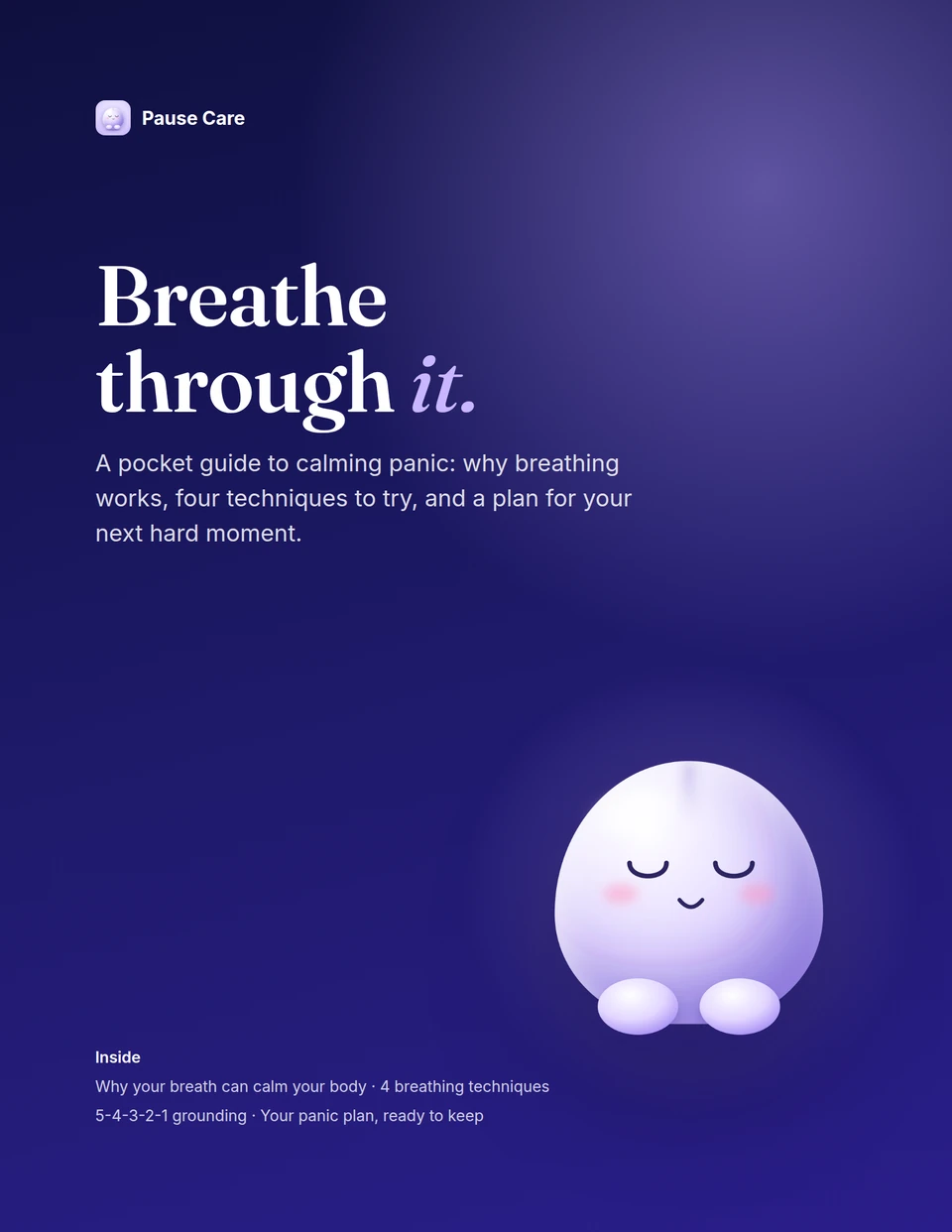
Eight pages on calming panic: why breathing works, four techniques with timing diagrams, 5-4-3-2-1 grounding and a panic plan you can print and keep.
“Such a lovely app! The cute animations are absolutely adorable, and the whole experience feels so calming and soothing. I especially love the breathing exercises and how they help me slow down, relax, and feel more at peace during stressful moments. Simple, thoughtful, and genuinely comforting. Definitely recommend!”
“Super clean and elegant app. Excited to build my routine with this, it's really making a difference so far.”
“The guided sessions have made it so much easier for me to work on my meditation and breathing. Definitely a game changer!”
The one that helps fastest when you're mid-attack. Look for help that starts in one tap with no menus, a calm guided voice, and a way to reach it from your Lock Screen. Pause Care was built around a one-tap Panic Button for exactly that moment, and it's free to download. 7 panic attack apps compared →
Yes. Pause Care is free to download on iPhone, and the Panic Button works without paying. There's an optional premium subscription for extra features. Free and paid panic apps compared →
Turn on a soft light, sit up and tell yourself this is panic and it will pass. Breathe in for 4 and out for 6 until your heart slows. If you're still wide awake once it eases, get up for a while rather than lying there trying to sleep. What to do when you wake up panicking →
Cortisol rises sharply in the first 30 to 45 minutes after waking. That's normal, but if you're already stressed it can tip into panic. Poor sleep, alcohol the night before and coffee on an empty stomach can make it worse. Morning panic attacks explained →
Stay calm and stay with them. Tell them you think it's a panic attack and that it will pass. Ask what they need, offer to breathe slowly with them, and don't tell them to calm down. Call emergency services if they have chest pain or you aren't sure it's panic. What to do and say when someone is panicking →
Name it, slow your breathing with a long exhale, ground yourself in what you can see and feel, and let it pass rather than fighting it. Most panic attacks peak within about 10 minutes. 5 steps to get through a panic attack →
A panic attack comes on suddenly and peaks within minutes. Anxiety usually builds gradually around a worry and can linger for hours or days. Panic attack vs anxiety attack →
Download Pause Care and have a technique — and Pip — ready before you need one.